Introduction
Two years ago, the television programme Report, broadcast on Rai 3, aired an investigation by journalist Giulia Innocenzi that brought to the centre of public debate the serious conduct perpetrated on pig farms in Northern Italy belonging to the Prosciutto di Parma PDO (Protected Designation of Origin) circuit. Report showed viewers the terrible truth hidden behind the Consortium’s farms: mistreated pigs, serious irregularities in hygiene and health management, failed inspections and alleged conflicts of interest on the part of the food certification body CSQA.
Among the subjects of the investigation Che porci! was a farm in Soliera, in the province of Modena, whose footage, filmed inside the sheds, was handed over exclusively to Ranucci’s programme by Last Chance for Animals.
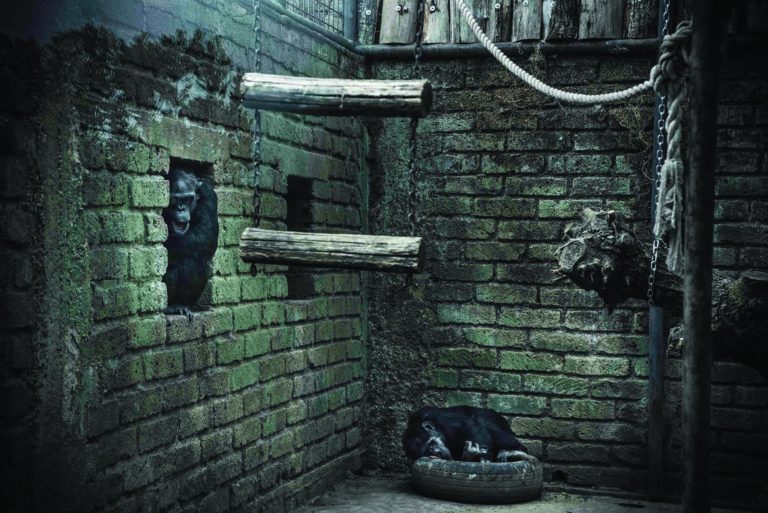
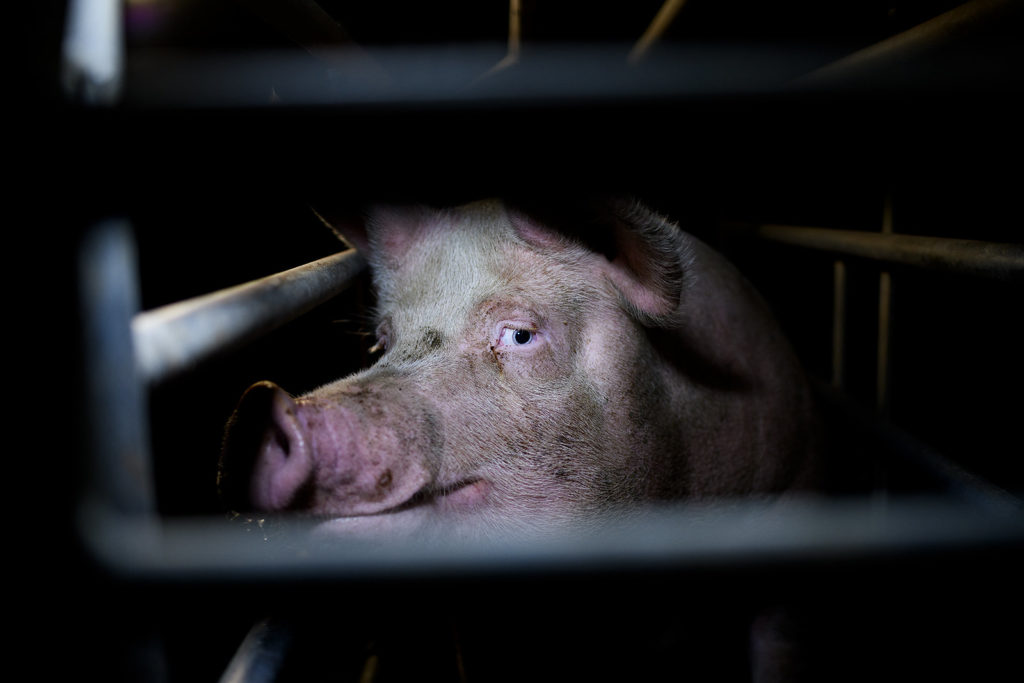
What emerged is disconcerting to say the least: between rat poison left unattended and rats devoured in the pigsties, mistreatment of the pigs, hydrogen peroxide in their feed, refrigerated cells for carcasses left switched off, open and unattended, slurry improperly discharged and infirmaries resembling concentration camps, the resulting picture is worthy of a horror film.
The footage gathered by LCFA and broadcast by Report made it clear that the made-in-Italy “excellence” of Parma and San Daniele ham is nothing more than a myth constructed ad hoc to serve the interests of the meat lobby. For showing this footage, journalists Giulia Innocenzi and Sigfrido Ranucci were placed under investigation for the offences under artt. 614, 615-bis and 648 c.p. (Italian Criminal Code) — respectively, trespass upon a dwelling, unlawful interference in private life, and receiving unlawfully obtained goods (ricettazione).
Amid all this, however, there is a piece of good news. In this article we offer an analysis of the reasoning behind the order that led to the partial dismissal of the proceedings in question by the judge for preliminary investigations (G.I.P.) at the Court of Modena.
The reasoning
On the offences of trespass upon a dwelling and unlawful interference in private life: as is well known, under art. 614 c.p. anyone who enters another person’s home, or another place of private dwelling or its appurtenances, against the express or tacit will of those entitled to exclude them, or who enters clandestinely or by deception, is liable to punishment. The penalties under art. 615-bis c.p. apply instead to anyone who improperly obtains information or images pertaining to the private life taking place in the places indicated in art. 614 c.p. or — unless the act constitutes a more serious offence — anyone who reveals or disseminates, through any means of public communication, information or images obtained in the aforesaid ways.
Well, with regard to both of the charges just mentioned, brought against Innocenzi and Ranucci, the G.I.P. granted the Public Prosecutor’s request for dismissal on the ground that no offence had been committed. Indeed, from viewing the relevant footage aired during the Report episode, it clearly emerges that the journalist, during filming, was not in places that could qualify as a “private dwelling” within the meaning of the law.
As reported in the order, and as can easily be verified by watching the episode, Innocenzi “was in the vicinity of the company’s offices, but outside the area marked off by the automatic barrier regulating vehicle access to the facility; at a later point, moreover, she could be seen engaged in a conversation with the complainant actually on the road leading to the facility (…)”.
As to the authorship of the audio and video recordings made inside the facility and aired on the programme, and hence their unlawful acquisition, the G.I.P. likewise ordered dismissal on the ground that the accused had not committed the act, given that the cameras used for filming on the farm appear to have been installed by the organisation Last Chance for Animals, with no possibility of establishing any contribution by the journalists as accomplices to that action.
On the offence of receiving (ricettazione): with regard to the contested offence under art. 648 c.p., it should be recalled that the offence of receiving is committed by anyone who acquires, receives or conceals money or goods deriving from any offence, or in any way acts as an intermediary in such conduct, for the purpose of obtaining a profit for themselves or for others. With regard to Report’s use of the video footage stemming from the commission of the offences of trespass and unlawful interference by the organisation Last Chance for Animals, the G.I.P. did not rule out that receiving had occurred, in both its material and its subjective element.
The Judge indeed held it indisputable that the journalists had used the unlawfully recorded footage in full awareness that it derived from the commission of the offences under artt. 614 and 615 bis c.p., gaining a benefit from it in terms of audience ratings. However — and this is the most interesting point — the Judge noted that “the question in the present case is quite another, and a loftier one: namely the applicability of the defence of the right to report to the offence of receiving committed in order to procure the news subsequently disseminated”. As is well known, art. 51 of the Italian Criminal Code provides that the exercise of a right, or the fulfilment of a duty imposed by a legal rule or by a lawful order of the authorities, excludes punishability.
This means that if an action, although potentially criminal, is carried out by virtue of a recognised right or a legal obligation, it is not liable to criminal prosecution.
The G.I.P. therefore proceeded to balance the competing interests in the present case: the public interest in the dissemination of the news, and the duties and responsibilities incumbent upon journalists. Citing the most recent case law on this point, the order highlighted that it does in fact allow the extension of the aforementioned defence to the offence of receiving, in line with the rulings of the Strasbourg judges, who have extensively examined the question with reference to Article 10 of the ECHR (ECtHR, Grand Chamber, judgment of 21 January 1999, Fressoz and Roire v. France).
The reasoning also highlights the applicability of the defence under art. 51 c.p. not only to offences committed through publication, but also to offences carried out in order to procure the news itself, because this is “consistent with both the Convention and the constitutional framework, in particular with art. 21 Cost. (Italian Constitution), which implicitly protects a general interest of the community in being informed, through the major means of mass communication, regarded today as objectively public services or services in the public interest”.
In the case of the piece aired by Report, the G.I.P. therefore found that “there undoubtedly exists a public interest in knowing the conditions in which pigs are farmed, not only for the protection of the animals themselves but for the legitimate right of consumers to know the production process behind pig meat, which is then marketed and purchased by citizens”.
In plain terms: the need to protect animals and the community’s interest in knowing what happens on farms is more important and therefore justifies the journalists’ potentially criminal conduct. The aim is a noble one and prevails in the balancing of interests.
Lastly, the order stressed that, given the alarming nature and public significance of the news, the two journalists cannot be reproached for failing to pursue a lawful alternative course of conduct, consistent with good faith, such as first reporting what they had learned from viewing the footage to the bodies responsible for animal welfare oversight (for example the local health authorities, the ASL) or to the judicial authorities (in this case the Carabinieri Forestali).
This conclusion was drawn from the fact that the omission was not held against them precisely because the two journalists’ thesis was that the consortium member companies were colluding with the very bodies responsible for animal welfare oversight.
Conclusions
In conclusion, the G.I.P. at the Court of Modena found that the defence under art. 51 c.p. was fully applicable in the present case, given the public significance of the news disseminated by Report. At the outcome of the balancing exercise, the interest in protecting animals and informing the public therefore prevailed over the duties and responsibilities incumbent upon Innocenzi and Ranucci, to whom no failing in their duties as journalists could be attributed.
The decision to partially dismiss the charges against Innocenzi and Ranucci is good news for everyone: for the animals, who deserve truth and justice; and for those who practise investigative journalism or conduct undercover investigations on behalf of animals, in the pride and awareness that cruelty against animals can and must be exposed.
To Giulia Innocenzi and the entire editorial team of Report go our heartfelt wishes that they may long continue their work with serenity, in recognition of how precious it is for animals, human and non-human alike.