When it comes to intensive farming and imports, public attention focuses almost exclusively on meat. However, there is a massive and far less transparent trade channel: that of bovine hides.
This is an essential raw material for the fashion, furniture and automotive sectors, which are rarely associated with the topic of animal welfare, even though a bovine hide can exist, in the vast majority of cases, only as a result of slaughter.
A clear mandate from citizens
This lack of transparency clashes with the wishes of European consumers. According to the 2023 Eurobarometer, 84% of EU citizens believe the current system must change, by imposing strict requirements so that imported products comply with European animal welfare standards. Citizens do not want their consumption — including non-food consumption — to fuel cruel practices beyond the Union’s borders.
The market figures:
According to the Eurogroup for Animals report Stop Cruel Imports, there are millions of “invisible” animals; indeed, the volumes of hide imports from countries with critical standards are enormous and, in some cases, exceed the volumes of beef imports.
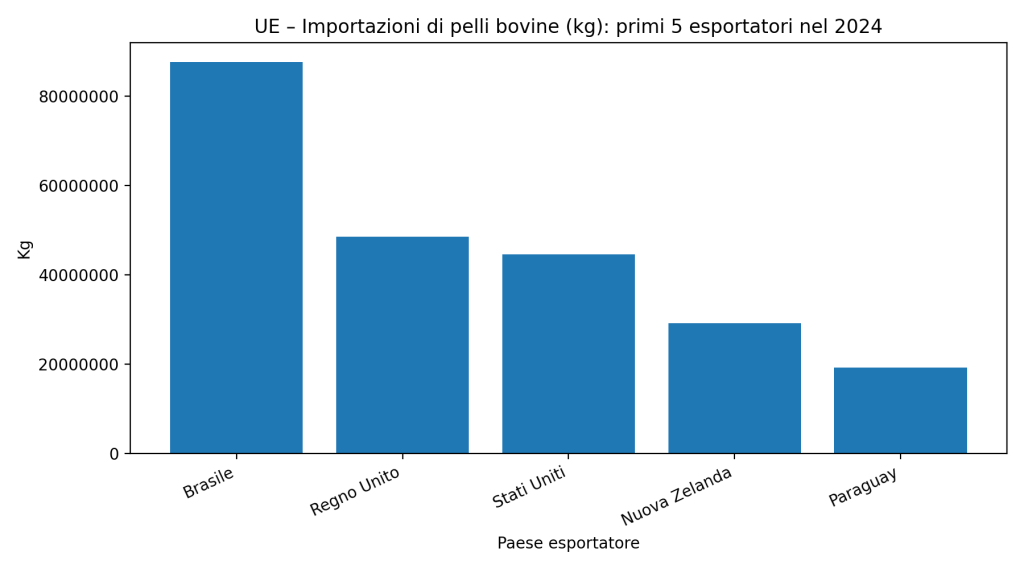
In 2024 alone, the data show massive flows into the EU:
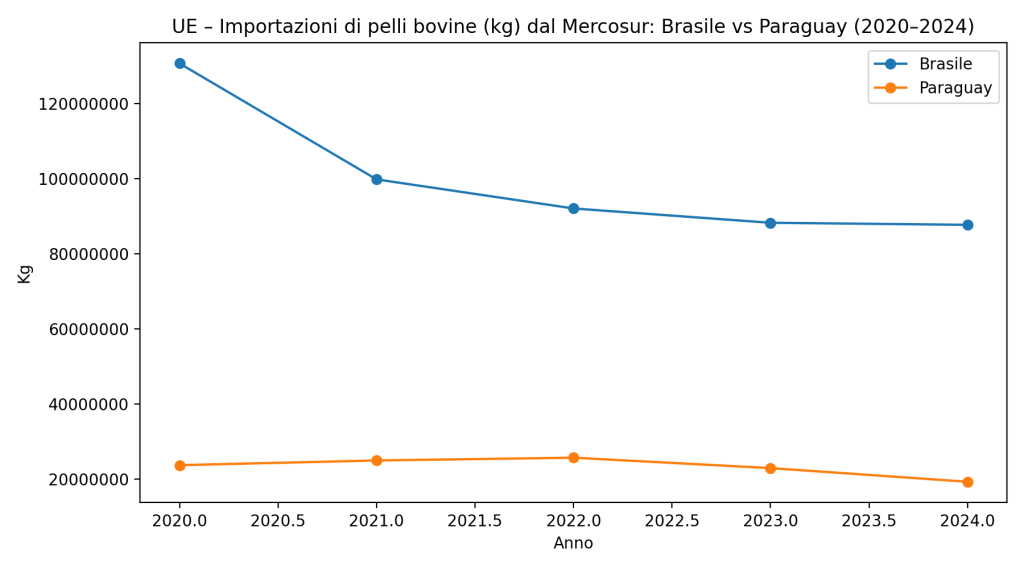
- From Brazil, 87,652,337 kg of hides are imported, corresponding to an estimated 2.9–3.5 million cattle.
- From Paraguay, 19,277,914 kg of hides are imported, equating to approximately 0.64–0.77 million cattle.
It is essential to clarify that no independent farming circuit exists for hides: the European Commission and the FAO confirm that they are by-products (by-products and secondary products) of the meat and dairy supply chain. Every imported hide therefore represents an animal that lived and was slaughtered within that production system.
The paradox of feedlots and EU policies
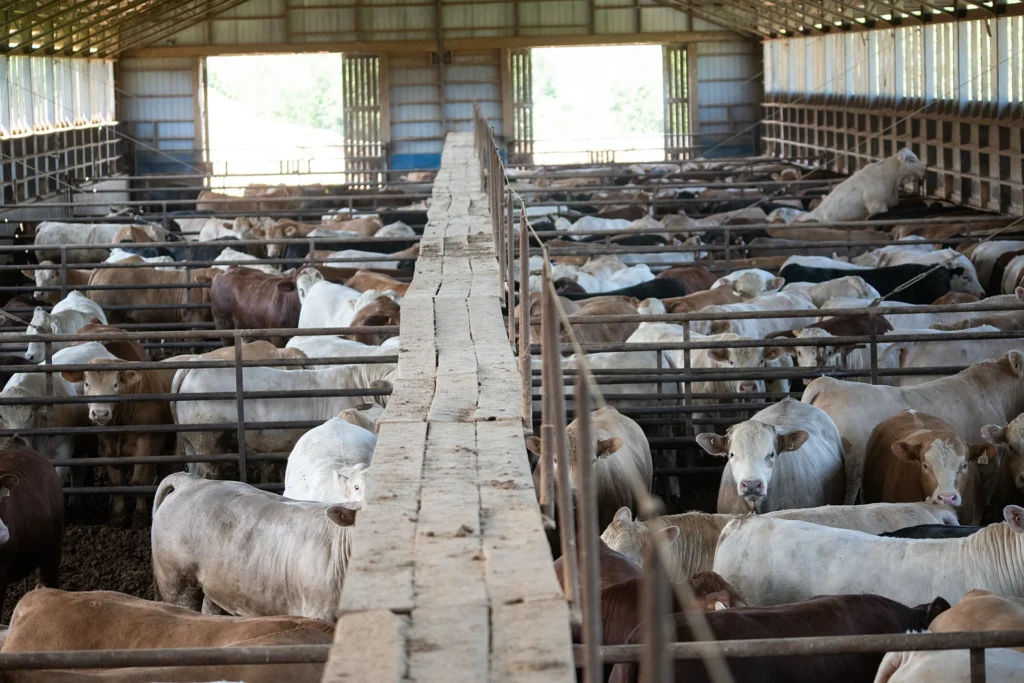
The central problem lies in the living conditions of these animals, which are often confined in feedlots (intensive fattening enclosures).
In these cramped spaces, cattle suffer from stress and respiratory diseases, which represent the leading cause of mortality.
Paradoxically, some EU policies incentivise this system:
- Tariff quotas: The EU quota for “hormone-free beef” requires a specific grain-based diet, achievable almost exclusively in feedlots. Countries such as Argentina and Uruguay have thus been pushed to develop these intensive systems in order to access the European market.
- Deforestation Regulation: There is a risk that South American producers will shift further towards feedlots to avoid controls linked to extensive grazing, thereby attempting to conceal the origin of the animals.
An environmental and health disaster
Feedlots are not only a major problem for animal welfare, but also a threat to the environment. They produce enormous quantities of toxic waste (antibiotic-resistant bacteria, heavy metals, ammonia) that contaminate surface water, causing the death of aquatic life and the creation of “dead zones” in coastal areas.
Beyond promises: the need for legal standards
While many large multinational companies, such as JBS, declare voluntary commitments to animal welfare, the reality is often different.
Recent documents indicate that such objectives are sometimes described by company executives as mere “aspirations” rather than binding commitments.
However, the EU has a powerful legal tool: it can restrict these imports by invoking “public morality” before the WTO (World Trade Organization).
Indeed, a labelling-only system would not be sufficient, since imported products often end up in processed supply chains where the consumer loses any possibility of oversight and, therefore, of informed choice.
Conclusion
Ensuring that imported bovine hides comply with EU standards is not merely a technical matter, but an act of ethical consistency and transparency towards the 84% of citizens who demand it.
The current bovine hide market is like a back door to a luxury restaurant: while customers carefully check the label on the dish in front of them, tonnes of waste from a cruel system enter through the back door — unseen by anyone, yet unknowingly financed by all.
This is why it is vitally important to keep attention high on the agreement between the EU and the Mercosur countries and to sign the petition we have launched, which has already gathered thousands of signatures.