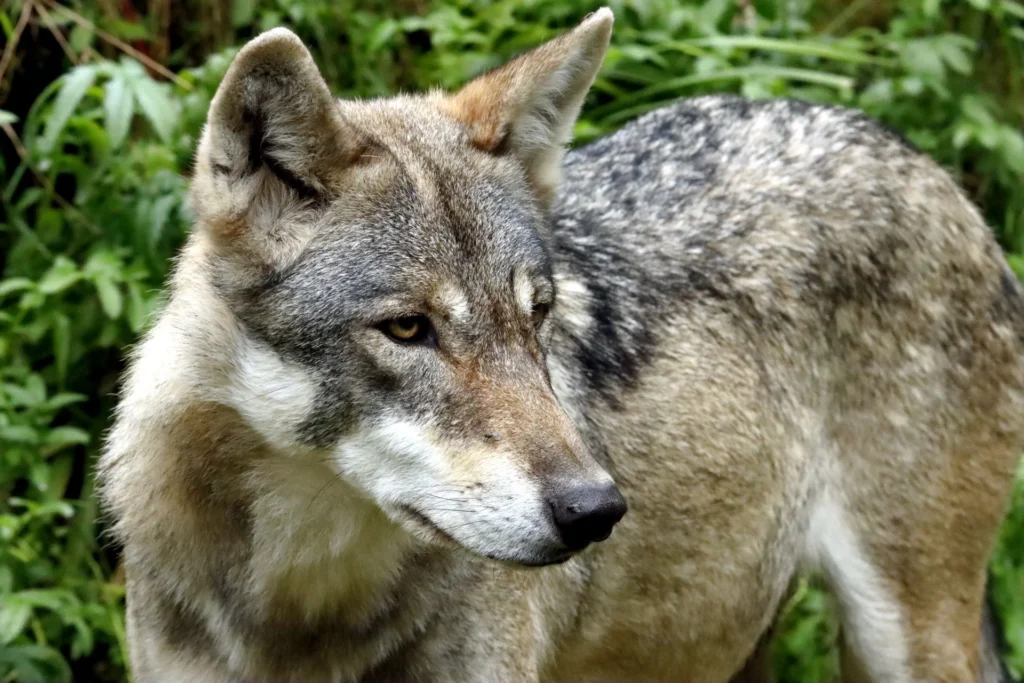
The latest event, though only in chronological order, concerns the death of a dog in Camaiore, killed by a wolf. The narrative that initially appeared in the newspapers told of a wolf, drawn by the smells coming from a barbecue, breaking into the garden trying to prey on a little girl, the owners’ daughter. Only the intervention of the family dog, to the astonishment of onlookers, would have prevented the worst, according to the story, as it had placed itself between the wolf and the girl, saving her from certain death. Here ends the fanciful reconstruction of a news story that went around the web.
In reality, there was no barbecue underway, no humans were present in the garden, only the dog belonging to a house located on the edge of a wood, without any fencing. That the dog was preyed upon by a wolf is the only real part of a story that is decidedly very different, which gives a good idea of how high imagination can soar whenever mainstream media talk about predators in general and wolves in particular. In this case, what soars high is the imagination of the article’s author, while what comes crashing down is the truth of the facts. There are many reasons, ranging from prejudice to a lack of source-checking, but what is now certain, particularly when it comes to wild animals, is the need to understand whether what one reads is true or the product of fantasies, not always disinterested ones. Indeed, one cannot forget that fake news drives clicks on websites, and that this translates into notoriety and value to sell to professional investors (read: advertising).
The obligation to verify is not a precept deriving from individual correctness but, for journalists, is a precise duty regulated by Article 2 of Law 69/1963:
“The freedom of information and criticism is an inalienable right of journalists, limited by compliance with the legal rules established to protect the personality of others, and it is their unwaivable duty to respect the substantial truth of the observed facts, always in keeping with the duties imposed by loyalty and good faith. News that proves inaccurate must be corrected, and any errors must be remedied.“
This is why it is very important that readers, before sharing news that already from the headlines seem “unusual,” take five minutes to carry out some checks. By now, the rush to share seems to have become more important than the validity of the content and its truthfulness. However, all of this can be curbed by the responsible behavior of each of us, who should be much more attentive readers, in the interest of truth and, in these cases, also of the reputation of species such as wolves. Animals that do not represent a real danger to people, provided that people behave responsibly. After all, this duty of “attention” applies to all of our behavior, from driving a vehicle to crossing a street, and therefore also in our relationship with wild animals. Every year in Italy several people are killed by cows for a variety of reasons, but we still always and only cry “wolf, wolf!”