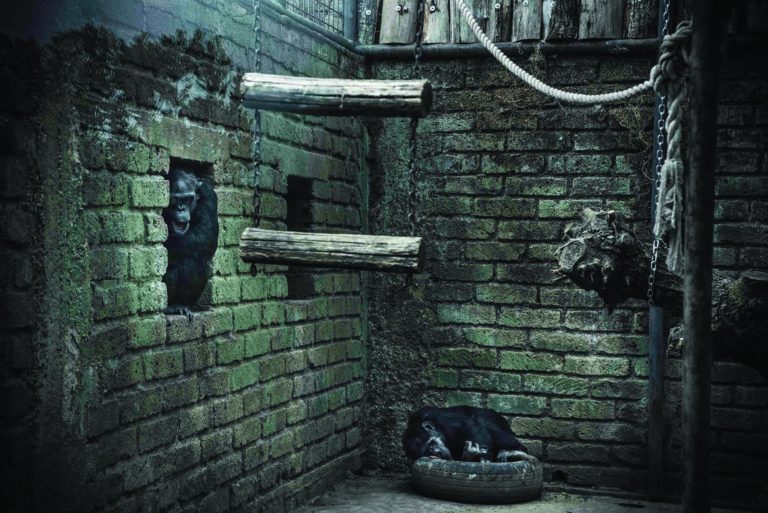
The European Union is internationally recognised as one of the regions with the highest regulatory standards for the protection of animal welfare. The adoption of Article 13 TFEU by the EU, and the consequent recognition of animals as sentient beings, are the results of a slow and careful journey by the Union, which began with the regulation of the human activities in which animals were used, in order to minimise their suffering. This journey now needs to be completed, through a reasoned revision of the legislation that applies to the protection of animal welfare.
What does Article 13 TFEU provide?
The TFEU (Lisbon, 2007) is the Treaty on the Functioning of the European Union, one of its founding treaties. It “organises the functioning of the Union and determines the areas of, delimitation of and arrangements for exercising its competences”1. Article 13 of the Treaty underlines the importance of guaranteeing the welfare of animals, recognising them as sentient beings capable of feeling pleasure and pain, and calls on Member States to promote responsible policies towards animals, considering them not only in terms of the economic utility of the activities that involve them, but also with regard to their welfare.
According to the World Organisation for Animal Health (OIE), an animal enjoys welfare when it is healthy, comfortable, adequately nourished, safe, free to express its natural behaviour and not suffering from distress, pain, fear or suffering2.
But what was the path that led to animal welfare considerations entering the Union’s founding treaties? Has this recognition produced an improvement in the protection afforded to animals?
The socio-legal context during the nineteenth and twentieth centuries
In 1964, in the United Kingdom, the concept of animal welfare came to the attention of policymakers following the publication of Animal Machines by Ruth Harrison. In response to the issues raised by the book, the British government commissioned Professor Francis William Rogers Brambell, a zoologist, to draw up a report that became known as the Brambell Report.
The concept of the ‘animal-machine’ was introduced by René Descartes in his celebrated Discours de la méthode of 16373. According to Descartes, animals are like machines, assemblages of parts devoid of consciousness and thought. He denies them the capacity to think because they cannot express themselves. Therefore, although he acknowledges a certain sensitivity in animals as living beings, he establishes no link between sensation and thought, in essence equating them with machines.
The Brambell Report defined animal welfare and set out a list of principles for “good husbandry”. In 1979, the United Kingdom established an independent advisory body called the Farm Animal Welfare Council (FAWC), which formalised these recommendations under the name of the Five Freedoms:
- freedom from hunger, thirst and malnutrition;
- freedom from environmental discomfort;
- freedom from disease and injury;
- freedom to express species-specific behavioural characteristics;
- freedom from fear and stress.
The assessment of animal welfare is based on indicators that can reveal problems of acute or chronic stress. However, the lack of specificity of these indicators has made it difficult to establish precise requirements. For example, they do not specify which acts of violence are prohibited, overlooking the abuses that occur on industrial farms.
Despite their limitations, these five principles have formed the basis of the European Union’s animal welfare policy. In 19944, a new model was proposed that expands these freedoms into five specific domains: nutrition/hydration, physical environment, health, behavioural interaction and mental experiences. This approach makes it possible to distinguish between the physical and functional factors that affect animal welfare and the animal’s overall mental state. It represents a step forward in strengthening the protection and welfare of animals in Europe, considering not only physical aspects but also those related to their mental state and behaviour.
The entry of animal protection into the EU’s founding treaties: a gradual process
The legislative context at the dawn of European integration
From the very start of the first integration processes, European legislation has sought to strike a balance between the health and welfare of animals and the needs of the market, to the point that today the European Union is regarded as one of the regions with the most rigorous legislation on the protection of animal welfare5.
This intent has translated into the identification of mandatory minimum standards to be observed for the full protection of animals used in human activities, introducing rules designed to guarantee the ethical and respectful treatment of animals in various contexts such as farming, transport and scientific experimentation. Through the adoption of directives and regulations, specific requirements have gradually been established and implemented for housing, feeding, veterinary care, pain management and other aspects of animal welfare, such as mutilations and environmental enrichment.
Before the adoption of Article 13 TFEU, and in particular in the period between 1968 and 1979, a fundamental role in promoting animal protection was played by the Council of Europe (CoE), an international organisation that promotes democracy, human rights, European cultural identity and the search for solutions to social problems in European countries. The CoE adopted three Conventions on the protection of farmed animals, whose texts laid the foundations for the integration of animal protection into the Union’s legal system:
- the European Convention for the Protection of Animals kept for Farming Purposes, of 10 March 1976;
- the European Convention for the Protection of Animals for Slaughter, of 10 May 1979;
- the European Convention for the Protection of Animals during International Transport, of 6 November 2003.
However, the standards laid down in these conventions were generic and not sufficiently rigorous to be genuinely beneficial for animals.
An important role in the development of a European sensitivity to the issue was also played by the Court of Justice of the European Union (CJEU), which, to cite a 1988 judgment6, Case 131/86, UK v Council, recognised the protection of the health and life of humans and animals as a matter of public interest.
The gradual adoption of directives and regulations protecting the needs of individual species contributed decisively to charting the path towards the full entry of animal protection among the core principles of the European Union.
The entry of animal welfare protection into the EU’s founding treaties
Before finding formal recognition in the primary law of the European Union, special attention to animal welfare was paid in the Declaration No 24 annexed to the Final Act of the Intergovernmental Conference adopting the Treaty of Maastricht.
“The Conference calls upon the European Parliament, the Council and the Commission, as well as the Member States, when drafting and implementing Community legislation on the common agricultural policy, transport, the internal market and research, to pay full regard to the welfare requirements of animals.”
Although this is not a binding rule but a statement of political direction, its importance lies both in its direct reference to the Union’s institutions and to the Member States, and in its affirmation of the need to balance the implementation of Community legislation with the pursuit of interests belonging to non-human animals.
What instead made a direct entry into the primary law of the European Union is the provision of the Protocol on protection and welfare of animals, annexed to the Treaty of Amsterdam, which states:
“The High Contracting Parties, desiring to ensure improved protection and respect for the welfare of animals as sentient beings, have agreed upon the following provision, which shall be annexed to the Treaty establishing the European Community: In formulating and implementing the Community’s agriculture, transport, internal market and research policies, the Community and the Member States shall pay full regard to the welfare requirements of animals, while respecting the legislative or administrative provisions and customs of the Member States relating in particular to religious rites, cultural traditions and regional heritage.”
The path that would lead to the entry into force of Article 13 of the Treaty on the Functioning of the European Union (hereinafter TFEU), as adopted following the drafting of the Treaty of Lisbon, signed on 13 December 2007, was thus fully under way and almost complete.
What will be the next step for animal welfare protection in Europe?
Before the adoption of the Treaty of Amsterdam (1997)7, which for the first time introduced the protection and welfare of animals into the Union’s primary law, recognising them as sentient beings, animals were regarded in law simply as agricultural goods.
From 1970 onwards, the European legislator began to balance the needs of the market with those of public health, also taking into account the suffering experienced by animals. Over the course of the EU’s evolution, directives and regulations were adopted (such as the Directive on the protection of animals during transport8 and the Directive on the protection of animals kept for farming purposes9) which had a direct impact on the situation in individual Member States. In Italy, for example, Law No 439 of 2 August 197810, implementing EEC Directive No 577 of 1974, constituted the first step towards the protection of animals at the time of killing, recognising the pain they experience and establishing an obligation of stunning to avoid unnecessary suffering. Finally, this gradual process of evolution led to the adoption of new scientific reference models, with provisions based on the needs of the individual species involved, culminating in the entry of the protection of animals, as sentient beings, into the Union’s primary law. The rules currently in force, however, still permit practices that science has clearly shown to be detrimental to animal welfare.
The legislative framework remains patchy, uses vague terms and offers specific instruments only for certain sectors, still failing to guarantee full protection for animals. Until the one currently under way, no revision of the European regulatory framework had been carried out following the entry into force of Article 13 TFEU. The Commission’s proposal is therefore expected to lay the foundations for the full and effective implementation of Article 13 TFEU, finally meeting the demands and needs of society and of animals.
Notes
- Treaty on the Functioning of the European Union, Article 1 ↩
- Special Report No 31 of 2008, Animal welfare in the EU: closing the gap between ambitious goals and practical implementation, European Court of Auditors, p.01. Link ↩
- Pierre Cornu and Egizio Valceschini, L’animal-machine au tribunal de l’histoire, in Sciences et société, alimentaion, monde agricole et environnement, 31 March 2020. Link ↩
- Mellor and Reid, 5 Domains Model, 1994. ↩
- Alice Di Concetto, For a More Humane Union:A Legal Assessment of EU Farm Animal Welfare Legislation in The European Institute for Animal Law & Policy (2022). pp.10-15. ↩
- CJEU, United Kingdom of Great Britain and Northern Ireland v Council of the European Communities, 23/02/1988.
https://eur-lex.europa.eu/legal-content/IT/TXT/?uri=CELEX%3A61986CJ0131 ↩ - Treaty of Amsterdam amending the Treaty on European Union, No 97/C 340/01. Link ↩
- Council Directive of 19 November 1991 on the protection of animals during transport and amending Directives 90/425/EEC and 91/496/EEC (91/628/EEC).
https://eur-lex.europa.eu/legal-content/IT/TXT/PDF/?uri=CELEX:31991L0628&from=ET ↩ - Council Directive of 20 July 1998 concerning the protection of animals kept for farming purposes (98/58/EC). Link ↩
- Law No 439 of 2 August 1978, implementing provisions of Directive (EEC) No 74/577 on the stunning of animals before slaughter. Link ↩