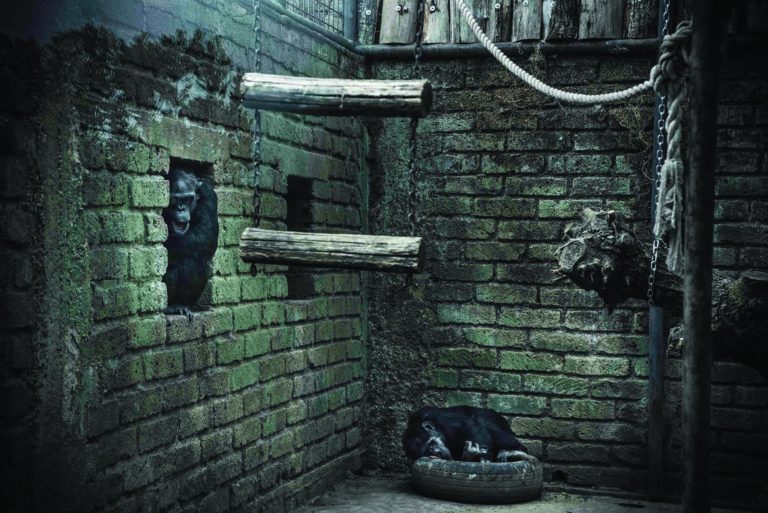
The use of cages as a farming system for laying hens has undergone a gradual evolution whose regulation has been driven by the European Union, but profoundly reshaped by some Member States in response to citizens’ growing demand for farming systems more respectful of animal welfare. In 2023 it is still possible to rear hens in cages that provide each animal with a minimum space roughly equal to that of an A4 sheet of paper. This model urgently needs to be rethought, following the example set by some legislators.
What does European legislation provide for the protection of laying hens?
In Europe, laying hens are the animals for which the transition towards cage-free farming systems is most advanced. With Directive 1999/74/EC of 19 July 19991, the Council laid down the minimum requirements for the protection of laying hens in all Member States, applicable to all establishments holding more than 350 birds reared for egg production. The legislation distinguishes three farming systems:
- conventional cages2, defined by a minimum of 550 cm² of available surface per bird and definitively prohibited as of 1 January 2012, with the construction or first bringing into service of this type of cage already banned from 1 January 2003;
- enriched cages3, which must provide at least 750 cm2 of cage area per laying hen, of which 600 cm2 of usable area (less than the area of an A4 sheet of paper) 一 compared with the minimum of 2,500 that science indicates would be necessary to ensure their welfare 一 a nest, litter allowing the birds to peck and scratch, appropriate perches, a feed trough that may be used without restriction and an adequate drinking system;
- alternative systems4, which lay down rules on surface area and stocking density and which must take account of the adequate protection of the hens’ welfare.
The gradual evolution towards alternatives to cage farming
In recent years, European citizens have shown a growing concern for the welfare of farmed animals: the ECI (European Citizens’ Initiative) End the Cage Age5 collected over 1.4 million certified signatures across Europe to ban the use of cages on farms. The European Commission responded positively to the ECI’s demands on 30 June 2021, publicly committing to present by 2023 a legislative proposal to phase cages out and ultimately ban their use.
The need for regulation ensuring greater protection of their welfare led EFSA (European Food Safety Authority), the EU’s food safety agency, to publish two scientific opinions6 concerning the conditions of laying hens and broilers (meat chickens) on farms7. EFSA recommends avoiding the use of cages and the continuation of practices such as mutilation (beak trimming, the removal of part of chicks’ beaks, and the amputation of combs and spurs) and feed restriction. To improve animal welfare, it is necessary to: reduce stocking density, allowing birds to perform the behaviours typical of their species, and provide friable litter and enrichment, offering objects that support comfort, strengthening and exploratory behaviour; use covered verandas to allow birds to explore, scratch and dust-bathe; and use raised platforms that enable them to rest and to escape from one another. In addition, facilities should be equipped with dark brooders, that is, functional areas providing chicks with a warm, dark and sheltered environment, improving their rest and reducing fear. The two opinions were requested by the Commission within the framework of its Farm to Fork strategy8, the Commission’s plan for the transition to a healthy, fair and sustainable food system, as part of the European Green Deal9, a set of policy initiatives put forward by the Commission with the aim of achieving climate neutrality by 2050.
In some States the transition to cage-free farming systems is already a reality
While at European level the Commission’s legislative proposal is still awaited10, some States have already banned the use of cages on their own territory.
In Luxembourg, cages for laying hens have been prohibited by law since 2015.
In Austria11, conventional cages were eliminated as early as the end of 2008, three years ahead of the deadline set by Directive 1999/74/EC, under a decision agreed by all parties in response to growing consumer demand for more animal friendly production systems. Moreover, the Austrian legislator provided for the elimination of every type of cage as of 1 January 2020: their production and bringing into service was prohibited from 1 January 2005, and the use of those built before that date was permitted only until the end of the fifteenth year from the start of operations. Following an initiative by producers, a private traceability system capable of identifying the farm of origin of each individual egg was also established, and was later certified at federal level.
In other States it soon will be
There are also States where the ban will soon be in force, such as Germany, where a 2015 federal law established a ban on new cage farms and the decommissioning/conversion of existing facilities by the end of 2025, with a possible extension of up to a maximum of three years in exceptional cases of hardship12; the push to abandon cages as a rearing method was already strong, however, with the share falling from 10% in 2015 to less than 6% in 2020, conventional cages having been replaced by enriched ones before the deadline set by Directive 1999/74/EC. With the ban on colony cages, Germany will be cage-free as regards the rearing of laying hens in 2029.
In the Czech Republic13, the welfare of laying hens kept in cages first entered the public debate only in 201814. The organisation OBRAZ – Obránci zvířat, zs – drew media attention to the issue by launching a public awareness campaign which, by 2020, had led 78% of the population to declare themselves in favour of a ban on the use of cages in laying hen farming. This campaign of awareness-raising and pressure on the institutions led to the adoption of a law providing for an absolute ban on the use of cages as a farming system from 2027.
In France, the EGAlim law of October 2018 established a ban on building new facilities for laying hens and on refurbishing existing ones, so as to encourage farmers to transition towards alternative rearing methods. The French Minister of Agriculture, Stéphane Travert, honouring the promise made by Macron during the election campaign, announced a ban on the sale of eggs from caged hens by 202215.
In Denmark, an agreement with producers led to the abolition of the use of cages from 2023, with a 12-year transition period for the last 7 farms that still used them. The process will therefore be complete by 2035.
Slovakia saw the signing in 2020 of a memorandum of understanding between the producers’ association and the Ministry of Agriculture providing for the phasing out of cages by 2030, with public support to incentivise the transition.
And in Italy? What does the future hold?
In Italy, the past decade has seen a steady decline in the number of laying hens kept in cages, with a precipitous drop over the last 5 years16: at the end of 2018 there were 639 farms with cages, housing 21.2 million hens, while alternative systems accounted for 1,662 farms with 19.5 million hens; the following year, the number of birds reared with alternative methods (around 23 million) overtook those kept in cages (around 18.5 million). The lowest number of hens still in cages was reached in 2021, with fewer than 15 million birds17, that is, 35.62% of the total, sharply down from the 62% recorded just 5 years earlier. The introduction of mandatory egg labelling, with a clear indication of the rearing method used at the production stage, has played a fundamental role in this trend, enabling consumers to make informed choices and showing that Italian consumers are steering their preferences towards eggs from barn-raised hens. Despite an increase in the number of caged hens — and a corresponding fall in those reared with alternative methods — during 2022, owing to the avian influenza epidemic that struck Italy18 — alternative systems are more severely affected by epidemics —, a further reduction in the number of farms with cages was nonetheless recorded (-77 farms compared with 2021): it may be inferred that the Italian market is now ready to free itself from cages, and it is therefore appropriate that political forces take these data into account and establish a support network to help producers complete the transition towards an Italy in which laying hens live forever in cage-free farming systems.
Notes
- Council Directive 1999/74/EC: Link ↩
- Further technical details: Article 5 of Directive 1999/74/EC ↩
- Further technical details: Article 6 of Directive 1999/74/EC ↩
- Further technical details: Article 4 of Directive 1999/74/EC ↩
- Link ↩
- Link ↩
- Link, Link ↩
- Link ↩
- Link ↩
- On the need to revise the European rules protecting animals used for food purposes: Link ↩
- Tierschutzgesetz [Animal Welfare Law], BGBl. I Nr. 118/2004 as amended by BGBl. I Nr. 80/2010, Article 18(3). The law bans any more cages from being built after 2005 and then allows only 15 years more for existing ones to continue (ie banning from 2020). Link. wxe?Abfrage=Bundesnormen&Gesetzesnummer=20003541 ↩
- Link ↩
- Link. ↩
- Link ↩
- Read: Link ↩
- Read: Link ↩
- Read: Link ↩
- Read: Link ↩