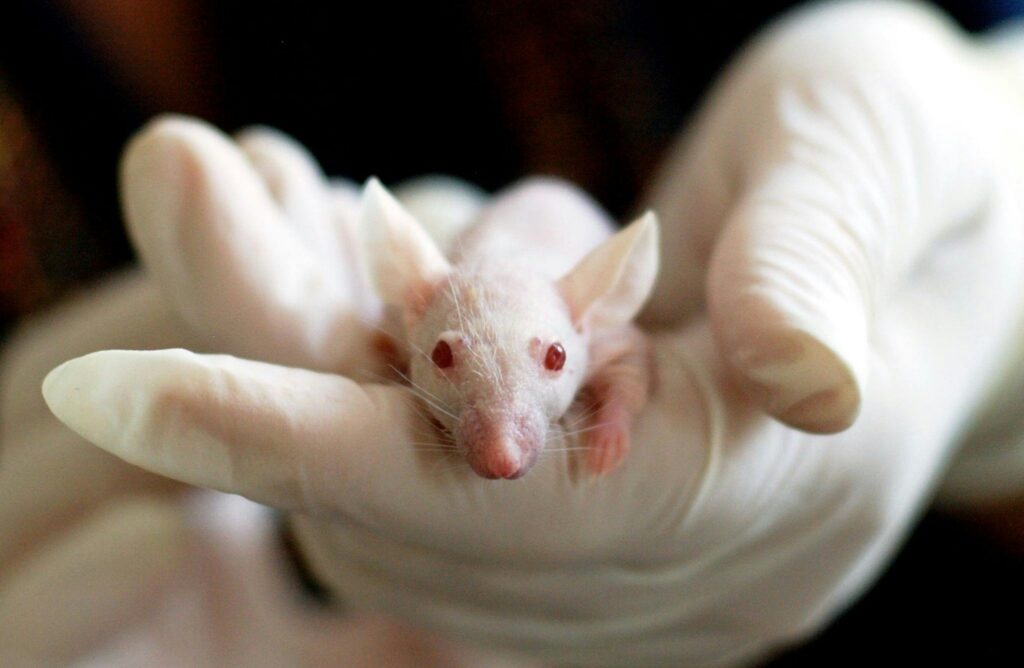
The preliminary hearing judge of the Court of Catanzaro, Judge Gilda Danila Romano, today handed down her ruling on the defendants who had opted for the fast-track procedure in the Grecale proceedings, the investigation into the serious offences committed in the animal facilities of the Magna Graecia University of Catanzaro. The outcome: three convictions, one plea bargain and seven acquittals.
The convictions
The sentences target the top of the corruption scheme and those who physically operated in the animal facilities:
- Giuseppe Caparello, director of the Veterinary Prevention Department of the ASP of Catanzaro (the local health authority): 4 years and 8 months’ imprisonment, found guilty — with the offences treated as a continuing crime and the fast-track sentence reduction applied — not only of the offence of corruption charged under count 38, but also of the two forgery offences charged under counts 34 and 35, in respect of which Animal Law Italia joined the proceedings as a civil party. The judgment also imposes a five-year ban from public office and orders him, jointly and severally with Russo, to pay damages to the civil parties (in addition to reimbursing legal costs, set at €3,000.00 for each civil party);
- Maria Caparello, daughter of Giuseppe Caparello, found responsible for having been unlawfully admitted to the postgraduate school in Clinical Pharmacology and Toxicology thanks to the corrupt relationship between her father and the former Rector: 4 years’ imprisonment for the corruption offence under count 38, together with a five-year ban from public office;
- Emilio Russo, researcher and supervisor of the procedures: 9 months and 10 days’ imprisonment for the offences of animal mistreatment and killing charged under counts 2, 3, 4, 6, 7, 8, 9, 10 and 11, with the offences treated as a continuing crime and the fast-track sentence reduction applied, together with a joint and several order to pay damages to the civil parties.
To these is added the plea bargain of Antonio Leo, a researcher, agreed at 1 year, 11 months and 10 days.
Lenient sentences: an issue for the legislator, not the judge
One critical point remains, however — one that concerns not the outcome of the proceedings as such but the legislative framework. The sentences imposed on those who physically carried out the mistreatment and killing appear not commensurate with the gravity of the charges: the decapitation of mice and rats without prior anaesthesia, the killing of a number of animals far exceeding that authorised by the Ministry of Health, the total omission of microbiological controls and a systematic violation of animal welfare obligations that went on for years.
The reason is structural, not judicial. Articles 544-bis and 544-ter of the Italian Criminal Code set sentencing ranges — respectively from four months to two years’ imprisonment for the unnecessary killing of animals and up to two years for mistreatment — that are manifestly disproportionate to the seriousness of the conduct they are meant to punish; an inadequacy further accentuated, in this instance, by the one-third sentence reduction inherent in the fast-track procedure.
The acquittals: a natural outcome, not a scaling back of the prosecution’s case
Some press reports have emphasised the number of acquittals. It is worth clarifying a point, however, which we had already highlighted in earlier stages of the proceedings: in trials involving a multitude of positions and charges, and a large number of defendants with differing roles and degrees of responsibility along the chain of conduct, acquittals are an entirely normal outcome and do not affect the overall strength of the prosecution’s case.
How to read the acquittal formulas
On a careful reading, in fact, the acquittal rulings confirm — rather than refute — the case built by the Public Prosecutor’s Office. The formulas adopted by the preliminary hearing judge are by no means equivalent.
Most of the acquittals were pronounced with the formula “the defendant did not commit the act” (art. 530, paragraph 2, of the Italian Code of Criminal Procedure). This formula does not deny the existence of the facts described in the counts of the indictment, but only the responsibility of the individual defendant for those facts. In other words, the mistreatment, the killing or the irregularities charged did take place: according to the judge, it was someone else who physically carried them out. This is the formula covering the positions of Giuseppe Caparello (count 1), Luca Gallelli (counts 39 and 40), Vincenzo Mollace (counts 14, 15, 16, 18 and 19) and Pierfrancesco Tassone (counts 27 and 28).
A second formula adopted is “the act does not constitute a criminal offence“, applied to counts 36 (Conforto and Voci) and 23-24 (Torella): here too the facts are held to have occurred, but not to be criminally relevant under the specific offences charged.
The only rulings with a genuinely full acquittal formula — “the act did not occur” — are just two, and they concern:
- count 37 (forgery), charged against Luciano Conforto and Domenico Voci;
- count 47 (false statements to the public prosecutor), charged against Vincenzo Musolino.
This is therefore a marginal portion of the prosecution’s case: two individual charges, within a body of accusations that remains intact in its core components — the underlying offences of animal mistreatment and killing and the core corruption and forgery offences at the top of the chain.
The strength of the investigation
It is also particularly significant that the proceedings have already passed the scrutiny of the preliminary hearing, which — following the Cartabia reform — is now based on the more stringent standard of a reasonable likelihood of conviction (art. 425 of the Italian Code of Criminal Procedure). This is a far higher threshold than in the past, requiring the judge to make a prognostic assessment of whether the evidence is capable of sustaining the prosecution’s case at trial. The fact that the preliminary hearing judge found this threshold met for all the defendants committed for trial is in itself indicative of the strength of the investigation conducted by the Catanzaro Public Prosecutor’s Office.
Added to this, for the defendants who opted for alternative procedures, convictions have already been handed down: a fact that speaks for itself.
The trial continues
The most significant positions in the proceedings — starting with that of the Rector in office at the time, identified as the head of the criminal organisation, and nine other defendants, including the Chair of the OPBA (the university’s animal welfare body) and the ASP veterinarians in charge of inspections — will be examined in the ordinary trial, whose hearings opened on 12 May 2026. That is also where the conduct that the preliminary hearing judge, in the acquittals “for not having committed the act”, held to have occurred but not to be attributable to the fast-track defendants will be addressed.
Animal Law Italia, represented by lawyer Francesca Romana Dresda, is a civil party in the proceedings and has obtained the summons of the civilly liable parties: Magna Graecia University, the ASP of Catanzaro and the Ministries of Health and of University and Research will be called to answer for the damage before the court. The organisation has also appointed Dr Enrico Moriconi, a veterinarian specialising in animal welfare, as its own technical consultant.
We will continue to follow every stage of the trial. The full establishment of criminal responsibility is the precondition for dismantling the culture of impunity that all too often shields irregularities in animal research laboratories and the failures of the systems meant to prevent them.
Update June 12, 2026 — Reasons filed
The reasons for the ruling (No. 193/2026) were filed on June 9. The Judge opened the decision with a premise that confirms the prosecution’s position: the investigations have revealed widespread violations of the rules governing the use of animals in experimentation, with a general tendency among those involved to fail to ensure compliance with animal welfare regulations. Above all, the ruling affirms a general principle: the conduct found “cannot be ‘covered up’ or ‘justified’ in any way by the mere high-minded purpose of ensuring the discovery of new methods of human treatment and ‘saving human lives.'” Scientific research, however meritorious, must be conducted in strict compliance with animal welfare regulations.
Regarding the individual positions: Emilio Russo’s conviction is based on the researchers’ statements, which identified him as the direct contact for reports of critical issues in the animal facility (malfunctioning lighting and air conditioning systems, dirty cages, unsuitable conditions), and which described euthanasia by decapitation without prior sedation, as well as the use of more than the authorized number of animals. The acquittals, however, are based on case-by-case assessments of individual evidence: for Mollace, it was not proven that the critical issues in the facility affected the animals in his projects, nor that he was the recipient of the reports; for Torella and Tassone, the numerical discrepancies in the records were deemed compatible with the research procedures or the result of material errors by others. For Giuseppe Caparello, the Judge deemed the omissions in the ASP checks and the alleged falsehoods proven, excluding only his ongoing participation in the criminal conspiracy.
Russo’s conviction is particularly significant in light of the upcoming trial: it concerns nine charges related to projects in which several defendants, including the former Rector, were implicated in conspiracy.