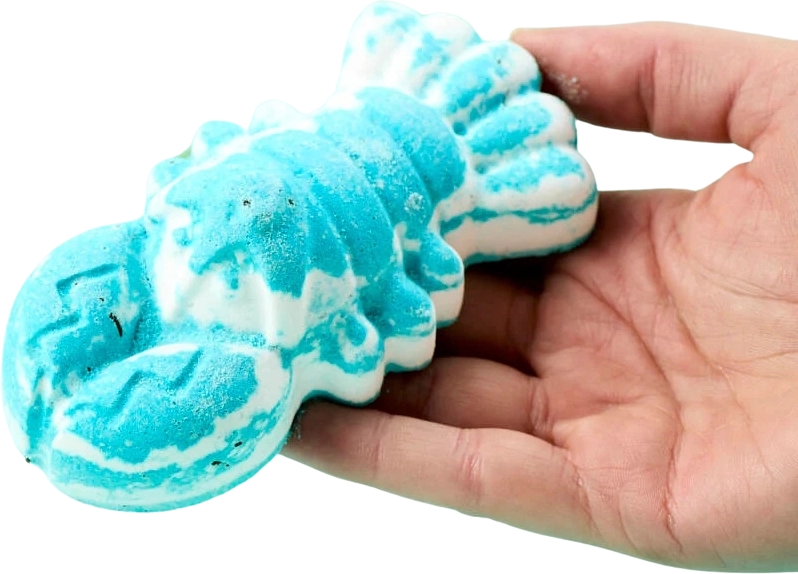
To mark World Oceans Day, Lush has chosen to stand on the crustaceans’ side. From 1 July, the handmade cosmetics brand, known for its ethical values, is turning all of its Italian shops into platforms for activism and signature collection points, inviting customers to sign the petition for a law granting greater welfare protections to decapod crustaceans.
The gesture takes shape in an iconic product: the limited-edition bath bomb Liberté Lobster (€6.00), a lobster that fizzes in the tub with hand-harvested arame seaweed, with the scent of summer and freedom, donating 75% of the selling price (net of VAT) to Animal Law Italia, in support of the campaign and the coalition “On the Side of Crustaceans”.
The bath bomb will be available in all Italian stores, on the Lush app and online from 1st July, while on Saturday 4th July volunteers from the coalition’s associations will be present in selected stores.
A coalition unique in Europe
“Dalla parte dei crostacei” is the first national coalition — and the first of its kind in Europe — dedicated to protecting these animals. It brings together nine animal protection organisations and was created to raise awareness among citizens, institutions and seafood industry operators about the conditions in which crustaceans destined for consumption live — and die.
The campaign makes precise demands: a law banning the keeping of live decapod crustaceans in direct contact with ice, the practice of boiling them alive, and the direct sale of live specimens to consumers. Above all, it calls for the legal recognition of decapod crustaceans as sentient beings, capable of feeling pain and suffering, as is already the case for mammals and birds and as solid scientific evidence confirms.
Sentient animals classified as “food”
Spiny lobsters, European lobsters, crabs, prawns and langoustines are often kept for days without food, exposed to direct light and in contact with ice, before being cooked alive. Science has long recognised their capacity to feel pain. Yet the moment they leave the water, Italian law effectively classifies them as “food”, stripping them of any protection. The same happens in Europe, where decapod crustaceans remain excluded from the rules that protect other animals during transport, holding and slaughter.
Behind the tanks of restaurants and fishmongers lies a daily reality of silent suffering. Some of the facts the campaign is bringing to the public’s attention:
- Crustaceans kept in tanks are subjected to mandatory fasting from the moment they are caught: feeding them is prohibited under current regulations.
- Spiny lobsters and European lobsters, accustomed to living at depth, should never be exposed to direct light, which worsens their suffering.
- Direct contact with ice causes stress comparable to what humans experience in extreme cold.
- Lobsters and brown crabs are kept for days with their claws bound, leading to muscle atrophy; alternatively, brown crabs have a tendon severed to prevent them from using their claws.
- A lobster plunged alive into boiling water takes between 8 and 10 minutes to die.
- A 2017 ruling by the Italian Court of Cassation set an important precedent, making it possible to sanction treatments that cause “unnecessary suffering” to crustaceans, though still within a very limited framework of protection.
Italy is ready for change
The numbers tell of a growing public awareness. According to the YouTrend survey commissioned by Animal Law Italia (October 2025), 58% of Italians believe that lobsters and crabs feel pain and should be protected like the other species used for food. In addition, 59% consider animal welfare a relevant criterion in their food choices, 64% would avoid keeping crustaceans in unsuitable tanks, 61% are against cooking crustaceans while they are still alive, and only 6% deny that they can experience stress and suffering.
Standing with those who have no voice
“Crustaceans cannot make us hear their suffering, and they have no expressions to appeal to our empathy. Yet they are sentient beings that, beneath their shells, feel pain. Caring about the suffering of those who have no voice is an important step towards building fairer, more sensitive and more inclusive societies. Those who care about animal rights will never forget the rights of human beings.” — Ermanno Giudici, coordinator of the Dalla parte dei crostacei campaign
For Lush, taking a stand is a natural choice. “Being on the side of animals — all of them — is in Lush’s DNA,” says Eva Pasquet, Lush Italia Giving coordinator: from the brand’s historic fight against animal testing to its campaigns against hunting, all the way to ingredients sourced from regenerative projects. “With this product from the Lush Giving collection, we too are standing on the crustaceans’ side, to finally obtain a law that puts an end to the cruelty inflicted on these sentient beings. Because not even the tough ones should suffer.”
The oceans cover 71% of the Earth’s surface and are home to 94% of the planet’s biodiversity, yet more than 35% of the world’s fish stocks are already exploited beyond sustainable limits. Against this backdrop, protecting marine wildlife cannot stop at safeguarding ecosystems: it must extend to the welfare of individual animals. The health of the oceans also depends on how we treat those who live in them.