Article by Francesca Faraoni, a law graduate of the University of Pisa, and Angela Maria Panzini, a law student at La Sapienza University of Rome.
Many will remember the iconic image of the small beagle held aloft above the barbed wire surrounding the “puppy factory” whose dogs were destined for animal testing.
Today marks the eleventh anniversary of that famous day when, after days of demonstrations, a large group of activists finally succeeded in letting sunlight into the sheds of Green Hill S.r.l., setting in motion a lengthy trial that ended with the conviction of those responsible for the facility and its managers for the offences of killing and mistreatment of animals.
We retrace the case that shocked public opinion, fostering a greater degree of empathy and awareness of the issue, and inspiring a significant legislative reform that banned the breeding of dogs, cats and primates destined for experimentation.
The peaceful protests and the entry into Green Hill
On 28 April 2012, during a peaceful march, a number of demonstrators managed to enter the Green Hill facility in Montichiari, in the province of Brescia — which had operated since 2001 in the sector of breeding dogs destined for the testing of medicines for animal and human use, for the production of dietary feed for pets, for microsurgery procedures and for the determination of levels of environmental contamination of organic and chemical origin — rescuing dozens of Beagle puppies.
This episode marked the culmination of a long series of demonstrations organised in the preceding months by numerous animal advocacy groups, united in their determination to challenge a business they regarded as unacceptable — so much so that for months it drew thousands of activists from all over Italy.
In July of the same year, an inspection would lead investigators to discover the terrible conditions in which the dogs bred at that facility lived, where mortality was estimated at around 6,000 beagles over four years. Besides being the target of continuous protests, the facility had in fact long been the subject of formal complaints, both for administrative irregularities and for alleged offences against animals.
On 18 July of the same year, all of Green Hill’s beagles were placed under evidentiary seizure, and their recovery was completed on 21 September 2012, when the Public Prosecutor’s Office of Brescia entrusted their custody to associations engaged in animal protection. Before long all the dogs were entrusted to private individuals, finding their first families and at last enjoying open air and natural light, freed from the din of their fellow dogs barking inside the sheds.
From social mobilisation to the committal for trial of the Green Hill company and its managers
The social mobilisation that gathered around the Montichiari breeding facility provided a valuable spur to the investigation conducted by the Brescia public prosecutors, which concluded on 26 September 2013 with the issuing of the decree of direct summons for trial of the company Green Hill 2001 S.r.l. and its managers. Specifically, the investigations led to the formulation of two charges against the staff of the infamous puppy factory for the offences under arts. 110, 81, second paragraph, 544 bis and 544 ter of the codice penale (c.p., the Italian Criminal Code). The defendants were thus charged, as joint principals, with the offence of killing of animals and the offence of animal mistreatment, for having caused the unjustified death of a large number of animals and for having subjected the dogs kept at the facility to treatment unbearable in light of their ethological characteristics.
A terrible Pandora’s box: the trial that helped shed light on certain aspects of animal testing
Indeed, the judgment of 23 January 2015 of the Court of Brescia represents an important moment for the recognition of animal rights, even in a field as particularly sensitive as that of experimentation.
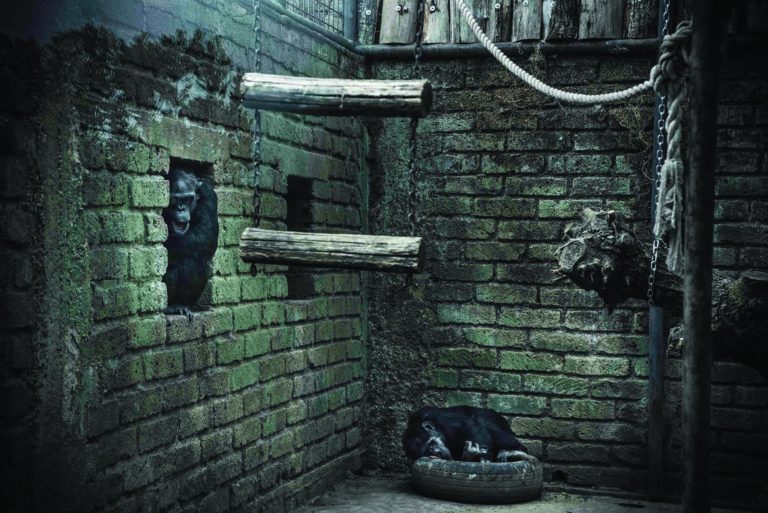
The investigations revealed, distressingly, that the 2,639 dogs confined there were subjected to degrading treatment, denied the possibility of responding to the most elementary stimuli — extending to the casual practice of euthanasia for base reasons of cost-saving, in open conflict with the special legislation in force at the time of the events.
As specified in the judgment, D.lgs. 116/1992 (Legislative Decree no. 116 of 1992) on the protection of animals used for scientific purposes laid down “requirements of a binding nature, and not mere guidelines or recommendations open to derogation”, which the facility’s managers knowingly violated. For example, the staff’s email correspondence provides documentary proof of the high temperatures in the sheds, well above the threshold set by art. 5 of that law (30 degrees Celsius instead of a maximum of 21, in the total absence of an adequate ventilation system for the premises), which inevitably aggravated the state of health of the dogs confined in the cages — too small, and unsuited to allowing the animals to withdraw and escape the external stimuli of their fellows.
It is precisely on the beagles’ state of health that the final and most substantial part of the judgment focuses. From the report of the Prosecutor’s veterinary expert consultants it emerged that the dogs confined at Green Hill suffered widely from severe dermatitis and chronic diarrhoea, a manifest symptom of diseases of the enteric tract caused by states of malnutrition and overcrowding. The care administered by the staff was nonetheless insufficient, both in dosage and in the number of days the medicines were used, so that the condition of many of the dogs housed there worsened to the point of death. In other cases, they were instead euthanised, without scruple — above all the puppies, who could well have been treated with transfusions, unfortunately too complex and costly to carry out.
The judgment also examines the manner in which surgical procedures were performed on the Green Hill dogs. In particular, it emerged that anaesthesia was administered without observing the prescribed pre-anaesthetic procedures, causing the animals severe suffering and distress, not infrequently followed by death from cardiac and respiratory failure. The puppies were kept in cages whose bedding was made up of many small pieces of sawdust which, when ingested, caused dehydration, an inability to feed and, in the most serious cases, death by suffocation. All of this conduct — to which must be added the killing of 44 dogs, for the sole purpose of disposing of animals no longer saleable on the market — led to the defendants’ conviction for the offence under art. 544 bis c.p.
Nor does the judgment fail to analyse fully the conduct that caused the animals not only physical suffering (such as the needle-tattooing of identification codes instead of the use of microchips, or the withholding of care), but also injury of a psychological nature, such as the lack of paddock areas for exercise, the impossibility of finding secluded places in which to rest, the exploitation of the breeding females and the distress inflicted upon them (the consequence of which was indifference towards their litters and, frequently, the premature death of the puppies).
On this point, the Court found that the offence under art. 544 ter c.p. was made out in the deprivation, to the beagles’ detriment, of their behavioural patterns, as they were subjected to treatment unbearable in light of their ethological characteristics. No merit was therefore found in the reconstruction offered by the defence, according to which such conduct was in fact attributable to the specific activity of breeding animals for research.
The judgment under review is striking because, for the first time, the — impassable — limit of necessity imposed by the sectoral rules was held to have been exceeded. Although certain activities (such as animal testing, slaughter et similia) permit the killing and exploitation of animals, the special laws regulate in detail the manner in which they are to be carried out, so that any conduct exceeding the statutory provisions may well constitute mistreatment.
The conviction upheld at second and third instance
The first-instance conviction was challenged before the Court of Appeal of Brescia, which upheld it in full in its judgment of 23 February 2016. Against that confirmation, the convicted parties then lodged an appeal before the Court of Cassation which, on 3 October 2017, finally brought this sad affair to a close.
In detail, by their first ground of appeal, the appellants complained of the violation of art. 544 ter, first and third paragraphs, c.p. and of art. 13 of d.lgs. no. 116 of 1992, as well as of defects in the reasoning in relation to the finding of criminal liability, arguing that art. 19 ter of the coordinating and transitional provisions of the Criminal Code excludes the application of the penalty where the provisions laid down by the special laws governing the breeding of animals for experimental purposes are complied with.
By their second ground, the unsuccessful parties objected to the failure to reclassify the facts under art. 727, second paragraph, c.p., as well as to defects in the reasoning, and raised a question of constitutionality of art. 544 ter c.p., with reference to arts. 3, 27, third paragraph, and 117, first paragraph, of the Italian Constitution, as well as art. 49(3) of the Charter of Fundamental Rights of the European Union, insofar as it punishes more severely those who subject an animal to treatment unbearable in light of its ethological characteristics than is provided by art. 727 c.p. for those who keep animals in conditions incompatible with their nature and productive of severe suffering.
Finally, they complained of a defect in the reasoning regarding the conviction for the killing of certain dogs by euthanasia in the absence of reasonable grounds.
All three grounds of appeal were rejected by the Supreme Court, but it is above all the reasoning given by the Judges on the second ground of appeal that is of particular value.
The Court in fact clarifies two important points. In primis, it finds that the courts of first and second instance acted entirely correctly in identifying intent in the defendants’ conduct, since they had carried out “precise and conscious decisions to violate the proper rules for the keeping of the breeding facility”, despite being “individuals fully equipped with the technical competence to understand their negative consequences for the animals”.
Secondly, the Court of Cassation — dispelling any uncertainty as to the importance of animal welfare in its ethological, and not merely physical, dimension — observes that art. 544 ter c.p., unlike art. 727 c.p. (a minor offence punishing those who keep animals in conditions incompatible with their nature and productive of severe suffering), constitutes a serious offence characterised by the subjective element of intent alone, and not also by negligence, as well as by the further requirement of cruelty or absence of necessity.
An important step towards greater legal and legislative awareness
In conclusion, it is abundantly clear that the Green Hill judgment constitutes a true milestone in the recognition of animal rights, since the entire judicial saga was triggered by a new social awareness and in turn gave rise to important reforms, such as the enactment of the more stringent D.lgs. 26/2014 (Legislative Decree no. 26 of 2014), which prohibits the breeding of dogs, cats and primates for laboratory use in Italy.
Nevertheless, it must also be observed that the two counts of indictment and conviction of the Montichiari offenders stem from a perspective that is still strongly anthropocentric. Title IX bis of the Criminal Code is in fact headed “Offences against the sentiment for animals”: it follows that the object of the offences de quibus is still the emotional sphere of people towards animals, and not the animal itself or, better still, the animal’s right to a dignified life.
Sources
- Direct summons for trial of the legal representative and staff of the Green Hill breeding facility
- Public Prosecutor’s Office at the Ordinary Court of Brescia, 09.10.2013
- First instance: Court of Brescia, Second Criminal Division, no. 210 of 23.01.2015
- Second instance: Court of Appeal of Brescia, 23.02.2016
- Court of Cassation, Third Criminal Division, no. 10163 of 06.03.2018
- Report of the veterinary expert consultants of the Brescia Public Prosecutor’s Office
- https://ali.ong/rivista/giurisprudenza/tutela-penale-degli-animali-esame-di-casi-giurisprudenziali-confronto-con-lesperienza-spagnola/