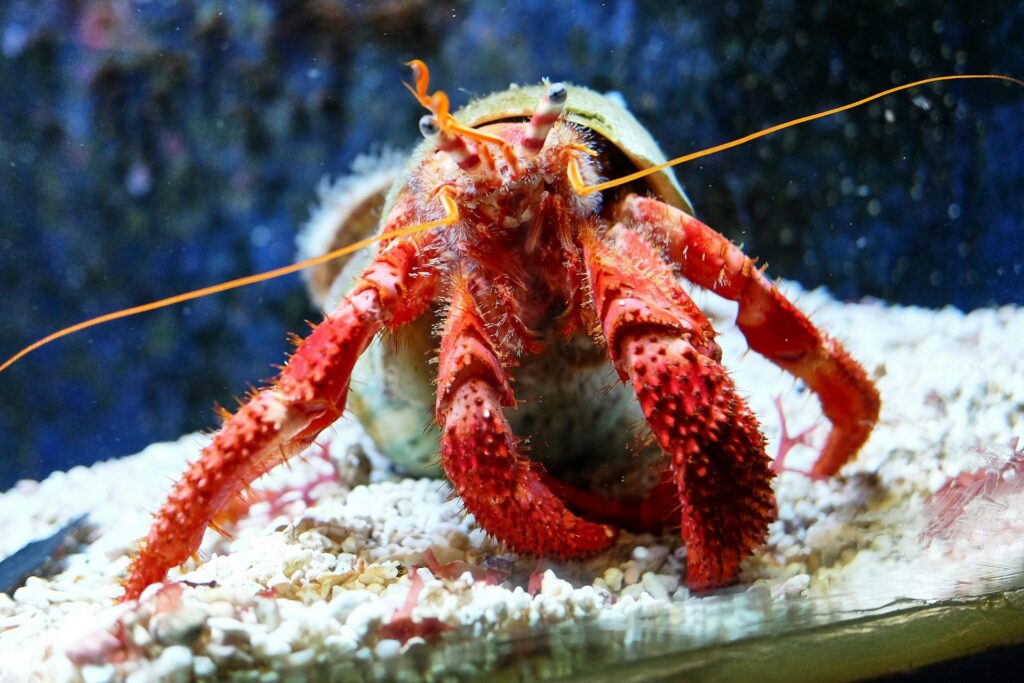
International scientific literature has, to date, extensively demonstrated the ability of decapod crustaceans (crustaceans with five pairs of legs, such as crabs, shrimp, lobsters, spiny lobsters and langoustines) to feel pain and suffering. In support of this, a comprehensive study is available, drawn up by the London School of Economics and Political Science in 2021, entitled Review of the Evidence of Sentience in Cephalopod Molluscs and De-capod Crustaceans, which concludes that decapod crustaceans are to be considered sentient beings, that is, beings that experience sensations, including pain and suffering. The European Food Safety Authority (EFSA) and the British Veterinary Association (BVA) have also previously described decapod crustaceans as beings with complex behaviour, possessing considerable learning abilities, endowed with a certain level of awareness, capable of feeling pain and, therefore, deserving of protection.
Until now, Italian academia had not taken a position on the subject, but things have changed. As part of the On the Side of Crustaceans campaign, Animal Law Italia has in fact commissioned the drafting of the scientific report “The Question of Sentience in Decapod Crustaceans” from the University of Messina. The report, written by Prof. Passantino and colleagues from the Department of Veterinary Medicine, reviews the most recent scientific evidence available on the capacity for sentience of these animals, in order to enable the assessment of suitable practices applied to the various stages of production, such as capture, transport, holding and slaughter.
The document begins by defining the concept of “animal welfare” and analysing the structure of the nervous system of decapod crustaceans. Subsequently, an overview of the Italian, European and international legislative context is provided, and the practices to which these animals are subjected, which can cause them prolonged suffering, are described in detail. It concludes by stating that, based on the numerous scientific pieces of evidence available to date, decapod crustaceans are sentient beings and as such require adequate protection and safeguarding, which currently do not exist.
Indeed, the majority of European Union countries, including Italy, do not offer adequate legal protection for these animals throughout the production chain, up to consumption. This means that decapod crustaceans are subject to practices that cause them considerable suffering, such as transport at inappropriate temperatures and high densities, display on ice and boiling while still alive. As analysed in ALI’s report Decapod Crustaceans: between Law and Science, some countries in the world, including Switzerland, New Zealand, Austria and Norway, have already introduced specific and restrictive protection regulations for these animals, with the aim of reducing their suffering. In Italy, the only relevant interventions are found in municipal regulations, which however prove to be approximate, inconsistent and lacking a solid scientific basis.
We at ALI hope that this document can contribute to the introduction of a legislative solution in Italy in the form of a national regulation that guarantees an adequate level of welfare protection for decapod crustaceans at all stages of the production chain, from fishing to transport, holding and slaughter.
With the On the Side of Crustaceans campaign, ALI aims to raise awareness among the competent authorities for the enactment of specific regulations to protect these animals in Italy, thereby fulfilling the reform of Article 9 of the Constitution, which establishes that «State law shall regulate the means and forms of protection of animals».