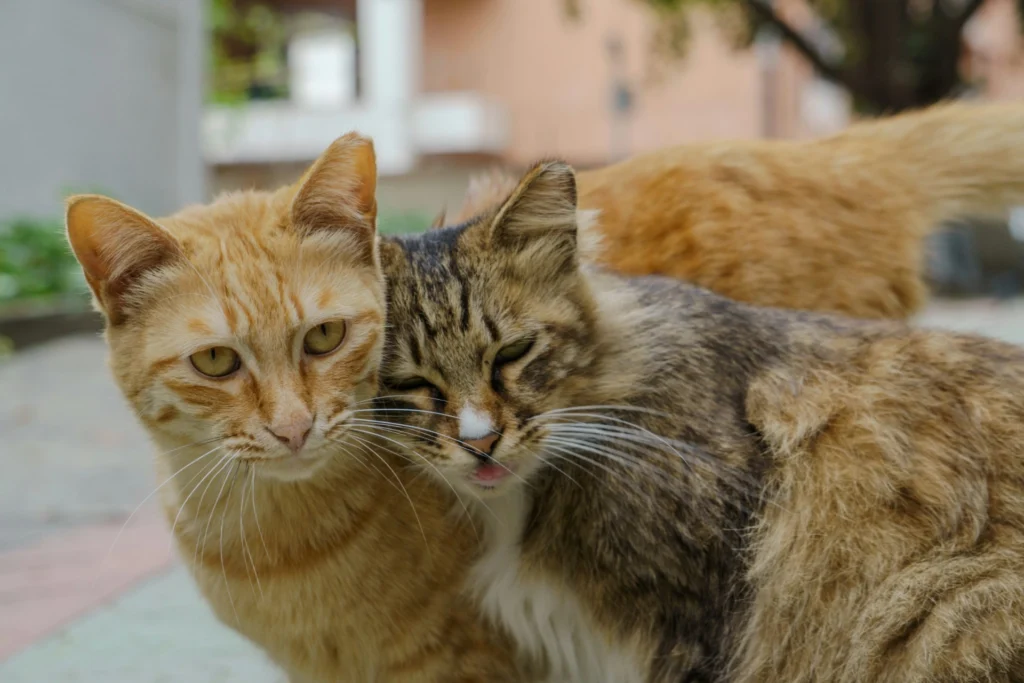
The protection of the cats living in our cities is already governed by a dense network of national and regional rules. Yet in everyday practice, colony censuses, sterilisations and the recognition of colony caretakers remain an obstacle course that changes from one municipality to the next and from one local health authority (ASL) to another. It is to fill this gap that Rete Felina (“Feline Network”), the new project of Animal Law Italia, has been created.
From isolated practices to a replicable model
The problem is not a lack of rules, but their uneven application: different paperwork from one area to another, long waiting times for veterinary procedures, ill-defined institutional roles, and no shared data. The result is a fragmented system in which the fate of a colony depends on the goodwill of individual officials, while the operational burden falls almost entirely on volunteers. Rete Felina was created to build a stable structure connecting caretakers and institutions, standardise practices and give citizens clear tools to exercise the rights provided for by law.
Ten years of experience become a national project
Rete Felina gathers and builds on the ten-year experience of “I Felini di Puglia” (“The Felines of Apulia”), a pilot project conceived and launched in 2016 by Mariagrazia Distante. Over ten years, that project has involved around 50 Apulian municipalities (7 of which formally joined through a council resolution), enabled many of them to carry out the first census of their cat colonies and activate sterilisations through the local health authorities (ASL), and produced standard forms, traceability procedures, geo-mapping of colonies, recognition of colony caretakers and the installation of GattoFioriera and GattaPanca feeding stations, also drawing on other organisations active in local social projects. A support network then grew up among the municipalities that adopted the project’s procedures.
The experience of the Apulian pilot project was recently exported to Calabria, starting from Lamezia Terme, where more than 500 cats have been sterilised across 100 registered colonies. And it is precisely from Apulia and Calabria that the new phase now begins, as a project under the aegis of Animal Law Italia, led by Distante herself.
“For too long, the cats of our streets have belonged to ‘no one’, left to the goodwill of a handful of people. With Rete Felina we want to give an identity to these animals and to those who care for them, turning ten years of good practice into a method that every municipality and every local health authority can apply.”
Mariagrazia Distante, head of the Rete Felina project
The project’s objectives
With Rete Felina, we have set ourselves ambitious objectives. For the first time in Italy, we want to connect all the actors involved in the protection of free-roaming cats, with the ultimate goal of achieving the full application of the rules that protect them.
Informing citizens
We want to make citizens aware of the existing rules and how to apply them.
Building the network
Connecting colony caretakers, municipalities and local health authorities (ASL), clarifying their respective roles and sharing information and good practices.
Training the network
Organising seminars and webinars, and making materials available online.
Legal support
Assisting citizens with the correct application of the rules, thanks to a network of lawyers trained in animal protection.
Advocacy
Acting at regional level to standardise management procedures, overcoming the fragmentation between local health authorities.
From the outset, the project’s metrics — new nodes activated, cats sterilised, municipalities involved — will be collected to measure its impact transparently.
“Rete Felina is another example of how we work: it is not enough for a law to exist, it must be applied equally for everyone. Our task is to act as a bridge between those who care for animals on the ground and the institutions that are supposed to protect them, so that rights written on paper become effective rights.”
Alessandro Ricciuti, President of Animal Law Italia
How to take part
Rete Felina has only just begun, and every node counts. We need:
- local contact people, municipalities and local health authorities (ASL) wishing to join the network through the retefelina.it portal;
- volunteer lawyers and legal experts wishing to contribute to the technical and legal support offered to local communities: apply through the Join the Team page;
- supporters who want to help the project gather pace: a donation or the ALI membership card will make it possible to expand the project.
The Rete Felina project sits squarely within ALI’s mission: to achieve fair laws for animals and ensure they are actually applied. Because every free-roaming cat — and every person who cares for one — deserves clear rules, the same everywhere.